Tuesday, September 13, 2016

Draping course - Design principles in draping!

Draping course - Balance in wall draping


Our blog focuses on providing up to date info and ideas on the latest news and trends in the events industry. We want to inspire our students and our clients across the country and even around the world to create and inspire the most exquisite events and weddings dreams are made of. For information on our latest courses and specials visit our website www.ectaint.com or follow the links to Draping, Wedding Planning and Decor courses. We offer in-class, correspondence and for our internet addicted students, online. Enrol today! For our video tutorials, please click here!

Good morning to everyone that loves #draping. I decided to write a series of blogs about design principles and element for decor and how it will tie in with draping a backdrop or gazebo. Let's first look at the difference between Principles and Elements.


WHAT’S THE DIFFERENCE?

Elements of design are the raw ingredients while the principles of design provide the guidelines for the effective combination of these elements. 
Design principles                      Design Elements
•Colour                                       •Space
•Proportion                                 •Focus
•Scale                                        •Form
•Balance                                    •Line
•Rhythm                                     •Value   
•Emphasis
•Contrast
•Placement
•Budget
What is Balance?
The distribution of the visual weight of objects, colors, textures and space
Under the horizontal balance we get a Symmetrical balance and a Asymmetrical
balance

Symmetrical Balance

Assymetrical Balance

According to Dawn Smith balance is: "Imagine you are looking at a see-saw.  Two objects that are the same weight will balance the see saw.  One large object will balance with smaller objects. And in the middle is every combo you can think of; one larger object balances with a middle and a small object, two large objects on each side, etc. 

Balance is about the illusion of balance and there are three types; horizontal, vertical and radial." 

For this blog we are only going to look at Symmetrical and Assymetrical Balance. Here is a few examples of symmetrical balance:


The moment you can draw a line in the middle of the draping and each side is identical to the other we work with symmetrical balance.
It is much more difficult to get assymetrical draping and decor to look good. You need to keep in mind not only the draping but also the rest of the decor. As an example:

When we look at the above picture we can immediately see they have made use of asymmetrical balance. The balance here has been achieved well by making use of placement and the draping. The draping opens to one end, this adds weight to the look. By "'opening" the draping to opposite sides they balanced out the overall look. Additional balance was achieved by balancing the right hand flowers out with the left-hand flower plus cake. It's important to note that should you have taken away the cake the flowers on the left would not have the correct weight, or should one move the cake to the right, you would have all your weight on the right hand, meaning there is no balance.

In our second photo the weight would be better balanced if either the backdrop or table flowers were moved to the opposite side so they are able to balance each other out.

Photo Credits:
Pinterest
http://dawnypoo.blogspot.co.za/2012/01/elements-of-design-in-party-decor.html#.V9e4lPl97IU


Saturday, September 10, 2016

Draping course

Draping course

#Draping course with ECTA.

Our #draping courses can give you the skills to turn a wedding or event into a far more spectacular affair, and you’ll be amazed what you can do with a little time, imagination and draping material. Perfect for creating a romantic environment, draping can also disguise a less than aesthetic interior and transform it into a magnificent and magical space. With our #draping courses you will learn everything you need to complete a full wedding or event draping, and includes all aspects of safety training as well as fabric samples and a suppliers guide to get you on the right track if you’re thinking of starting your own #draping business.
Learn at any of our campuses across South Africa and choose the type of schedule that fits your busy life. Click through for more information on our draping courses or contact us directly to find out more.
For more info contact Elisca at 0824416394 - whatsup or email info@ectaint.com


PS: We are the only training company that is training students from various universities. We are also the only training company that do training for SAACI - which is the events and conference industry association. If they use us...why not you? If you become a member of SAACI you can get a prefered supplier discount on our draping courses!

For more info on how to become a member at saaci - go to their website http://www.saaci.org


Samples of draping from Indian wedding draping - Pinterest.


Sunday, August 21, 2016

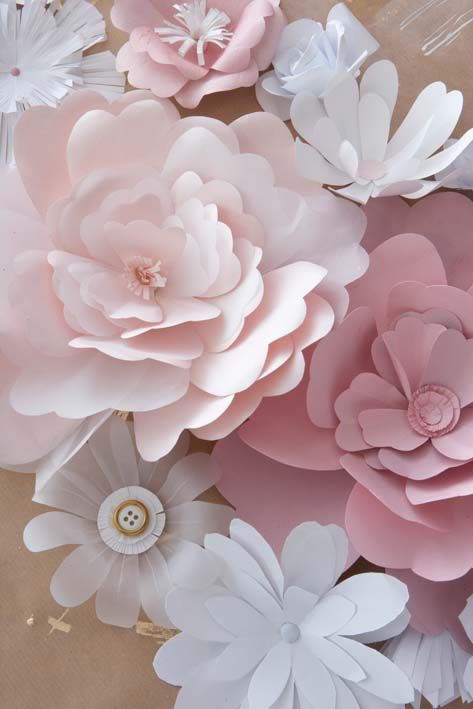
Draping course - Paper flower backdrop

Paper flower backdrop

If we said a few years ago that some brides would prefer paper flowers at their wedding - no one would beleive you! Paper flowers are one of the most exciting wedding trent for 2016 and 2017.

The best about this is that it is not very difficult to make your own paper flowers!


One the internet there are many tutorials to show you how to make your own paper flowers. Here are a few links to the paper flower making art.

https://liagriffith.com/diy-paper-gardenia/
http://ashandcrafts.com/paper-flower-backdrop/
http://www.rustandsunshine.com/2012/05/tissue-paper-flowers.html?showComment=1340722488245

A few things to remember when deciding to use paper flowers:

*  Keep in mind your use of color. You don't want a circus you want an elegant look and feel for your wedding.
*  Keep in mind the space where you want to use your paper flowers. Don't just paste them all over - use your design principles like Harmony, color, space, Balance, scale and proportion.

If you want to learn more on how to use design principles in weddings and events, contact us for more information on our events design course. We do have the course inclass and correspondence.

Look at all of our other courses: www.ectaint.com or contact us at 0824416394


Friday, October 16, 2015

Online draping course: How to do bohemian draping for a wedding?

Our blog focuses on providing up to date info and ideas on the latest news and trends in the events industry. We want to inspire our students and our clients across the country and even around the world to create and inspire the most exquisite events and weddings dreams are made of. For information on our latest courses and specials visit our website www.ectaint.com or follow the links to Draping, Wedding Planning and Decor courses. We offer in-class, correspondence and for our internet addicted students, online. Enrol today! For our video tutorials, please click here!

For us to be able to do a bohemian draping we must first understand what Bohemian fabric is and what  the different ways is to do a bohemian draping for a wedding. What is Bohemian clothing and fabric: Let's read about it a little bit...
http://hubpages.com/hub/BohoTheFashionHistoryofBohemianClothes 


200 Years of Boho
Bohemian style has, for over 200 years, been an exotic alternative to the accepted fashions of a given period. Generally associated with artists, writers, and intellectuals, bohemian culture incorporates various ethic clothing styles, as well as historical costume.
Bohemian style consists of loose, colorful clothing and has been known as boho chic, hippie style, and Aesthetic dress. With their long flowing hair and rich, though threadbare fabrics, bohemians stand out in a crowd representing a colorful counterculture based on creativity, poverty, and an indifference to social structures and traditions.

Elements of Bohemian Style

Bohemian style, now referred to as boho chic, has come down through history, reappearing as beatnik style and in the hippie culture of the 1960s. For 200 years, bohemian style has consisted of several fashion elements.
  • Loose, flowing clothing made of natural fabrics
  • Less restrictive garments worn without corsets, bras or other restrictive elements
  • Loose, flowing hair
  • Colorful scarves worn at the neck, on the head, or instead of a belt
  • Peasant style clothing including tunics, loose trousers, boots, and sandals
  • Used or worn clothing
  • Oriental elements including robes, kimonos, and the ethnic designs of Persia, India, Turkey, and China
  • Mixing historical elements of medieval clothing with ethnic styles
  • Layering
  • Matching of garments in a nontraditional manner, such as mixing prints, or unusual color combinations
  • Multi strands of beads, several bangle bracelets, and the wearing of unusual, hand crafted, or unmatched jewelry
  • Large dangle or large hoop earrings
  • Broad brimmed hats
  • Patched clothing
  • Paisley, flowered fabrics, ruffles, lace edged sleeves
  • A general disregard for tidiness and uniformity of dress
  • A look of contrived dishevelment
When we read the above article we can see definite words being used to describe Bohemian... Words like dishevelment, Patched clothing, Paisleys, nontraditional, unusual, peasant style, colorful and natural. 

How on earth can we bring those words into a draping that you do for a wedding. Remember that you must always pull the theme through out the wedding. If you decide on dishevelment, patched, colorful then that must be seen in your ceremony, reception, cake etc.

What type of material can I use for a Bohemian draping? Short answer: mix and match, colorful, mismatched, natural material.

Here is a few types of materials that you can use: 

Mexican                                            


Ikat


Indian                                             


Najavo


Tribal  


Aztek


Paisley                                                                     


Old scarves


Vintage materials and Sari's


The biggest thing you need to remember when you want to do a bohemian draping is that you don't have to have all the different fabrics and the ones that you do have must be hanged in a non traditional, mis matched way.  

Here are a few examples of the use of bohemian draping in weddings. 

Fabric strips: If you use a natural type of material like a cotton then it is easy to tear the material into strips. If you are using a thicker material it is best to cut the materials into strips. Hang the strips in an unorganised way over a pole, rope or tree.


Draping over trees. If the venue where you are getting married, has big trees on the property you can definitely consider to use the tree as an arch. You can then throw the draping material over the trees. Remember that it is definitely better to use natural material for such a draping.


Draping between trees. If you want a definite bohemian vibe at your wedding chose a venue that have lots of tree on it. You can then either tie a rope between trees and do your draping then between the trees like these examples. The other options is to put your gazebo's or pipe and drape between the trees and drape on them. I would not recommend pipe and drape between trees because there is a definite risk in the pipe and drape falling over and hurt one of your guests.


If you want to break away from fabric draping you can think about just using flowers for your arch etc or you can use a macrame as a backdrop or arch.


Loose draping over an arch made with branches. The most important thing to do this type of draping is the fact that you must use a light and whimsical type of material that will blow in the wind. Think about wimsical or fairy tale... With this type of draping, you can use lots of flower or even no flowers. 


Don't you have an arch? Follow this tutorial and make one for your wedding:  http://www.bridecraft.com/branch-wedding-arch.html

Can't you find the right material on a shoe string budget? Here is a tutorial that will show you how to make your own ikat printed material. https://www.youtube.com/watch?v=jcgsiLRgyds&feature=youtu.be

Events greetings 

Marieta

For more info on our online draping course email info@ectaint.com


Photo's from the following sites:

Wednesday, October 14, 2015

Online Draping course: How to drape with Ombre colors

Our blog focuses on providing up to date info and ideas on the latest news and trends in the events industry. We want to inspire our students and our clients across the country and even around the world to create and inspire the most exquisite events and weddings dreams are made of. For information on our latest courses and specials visit our website www.ectaint.com or follow the links to Draping, Wedding Planning and Decor courses. We offer in-class, correspondence and for our internet addicted students, online. Enrol today! For our video tutorials, please click here!

First we must find out what is the meaning of an Ombre wedding? What does Ombre mean? Ombre means Shadow. According to Merriam-webster dictionary:

ombré

adjective om·bré \ˈäm-ˌbrā\

Definition of OMBRÉ:  having colors or tones that shade into each other —used especially of fabrics in which the color is graduated from light to dark — ombré noun


The following website describes it well...http://www.obsessedevents.com/que-pasa-ombre-embracing-the-trend . A new wedding and fashion trend referred to as “ombre”, has been growing in popularity over the past year. 

“Ombre”, which is a French term for “shaded or graduated in tone”, is a fun effect where colors blend into one another from light to dark. It can be used to showcase a range of multiple colors or shades of one color— each offering a fun effect. It’s a perfect option for a couple who wants to use lots of different colors in their wedding, in a more sophisticated way than “rainbow colors” may offer. Ombre is being used everywhere: dresses, cakes, decor, flowers, nail polish and even hairstyles.


Now where on earth can I buy Ombre Material to drape with. It all depend on the bride. Does she wants the ombre color to go from dark to light horizontal or vertical. It is much easier to get the horizontal ombre that the vertical ombre. But before we start of with explaining on how to get an ombre gradient I want to tell you a little cheat way of knowing what colors will go together with your ombre wedding.
Go to your local paint store and get some paint sample cards in the colors that you like. Now it will be so much easier to know what color material you must buy to get your favorite ombre color scheme. When you do a horizontal draping make sure you get material as close as possible to your paint cards. When doing a backdrop draping, we always advise our students to start from dark to light and then again from light to dark. In doing that your lightest colors would be in the middle and framed by your darker colors.
Remember: that rule is not set in stone. You can go the other way around as well.. with your ligther color on the outside and your darker color on the inside. Basically just don't try and mixed the ombre color to much. You will start to get a circus effect!

The bottom photo is a good example of draping  in ombre color in a different way. Here they decided to use on light and one dark. But note that they kept to the design principals of tone, symmetry and repetition. 


If you decide you want to use a vertical ombre effect I would advise you to color your own material to get the right effect that you want. There is not a lot of places where you can buy ready made ombre material in the color you want. 

On youtube is a few tutorials on how to dye in ombre style. The best one (and the one I used) was the following one: https://www.youtube.com/watch?v=N458U7QPv5s .

Photo's for this blog from the following sites: